Door Closers and Push Bars for Commercial Entries
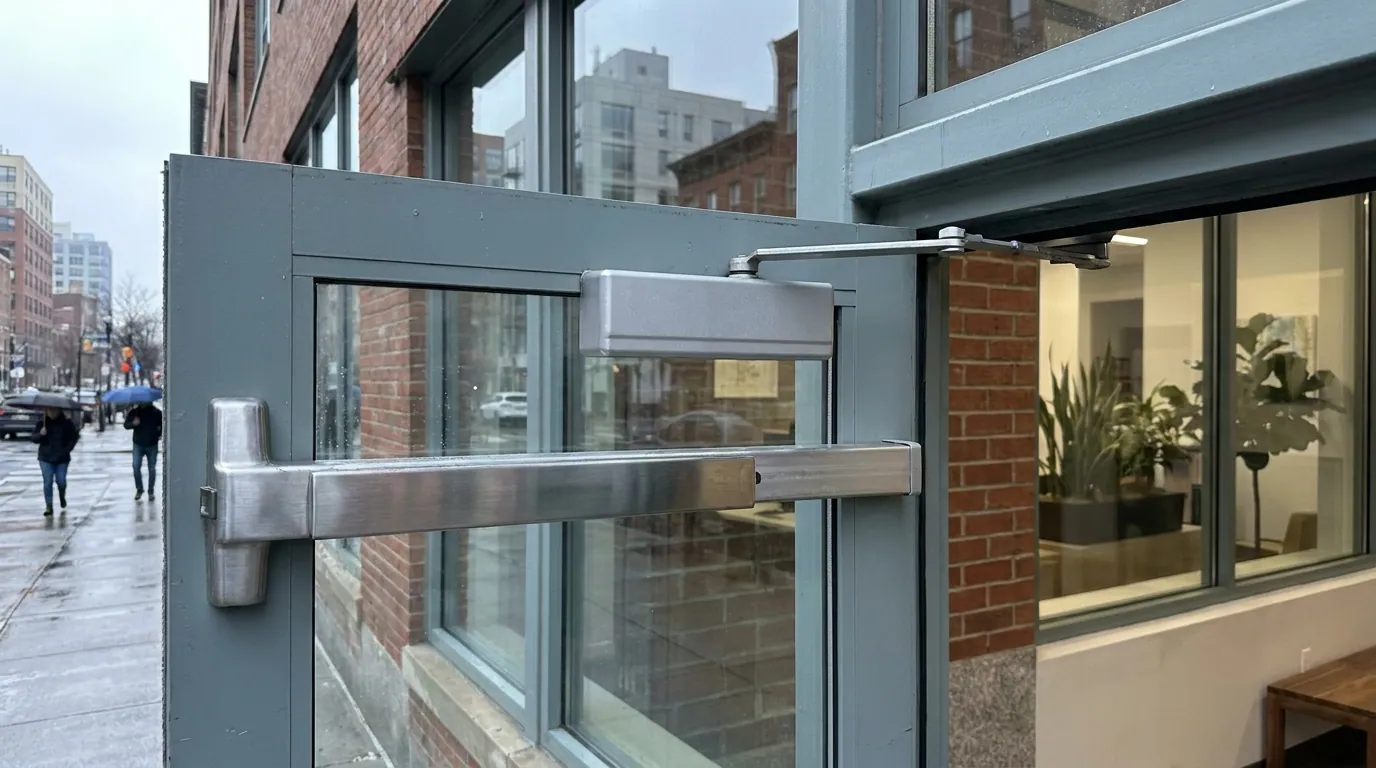
The closer and panic hardware decide whether a commercial door shuts, latches, and lets people leave quickly — not the door leaf alone.
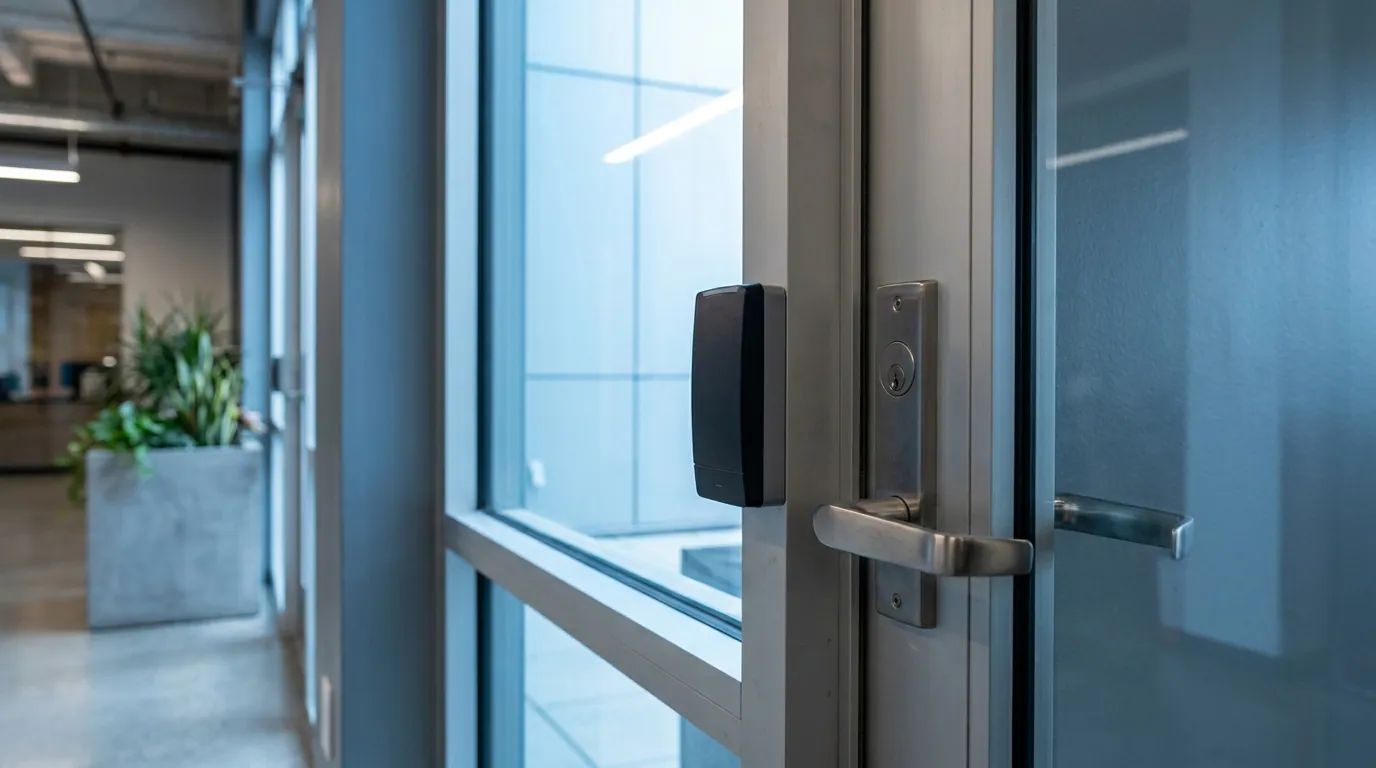
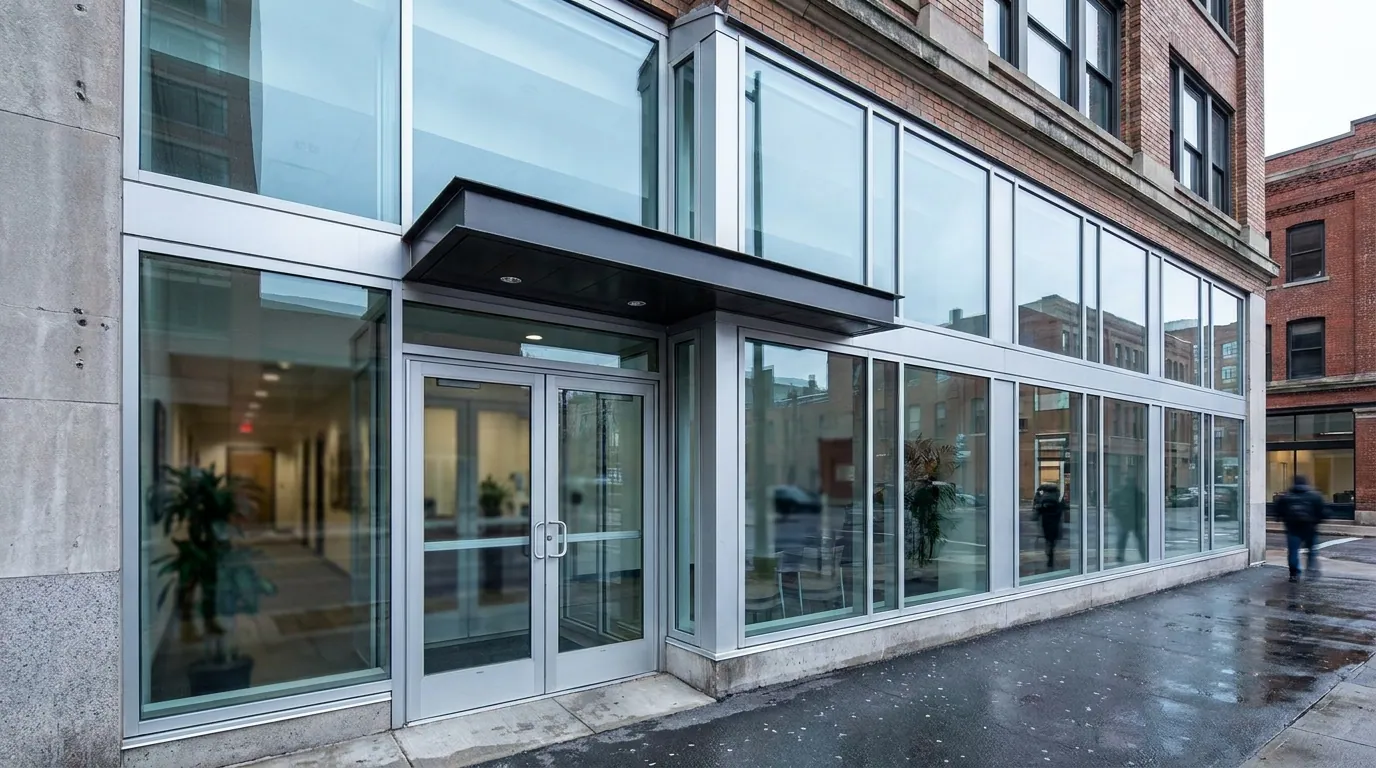
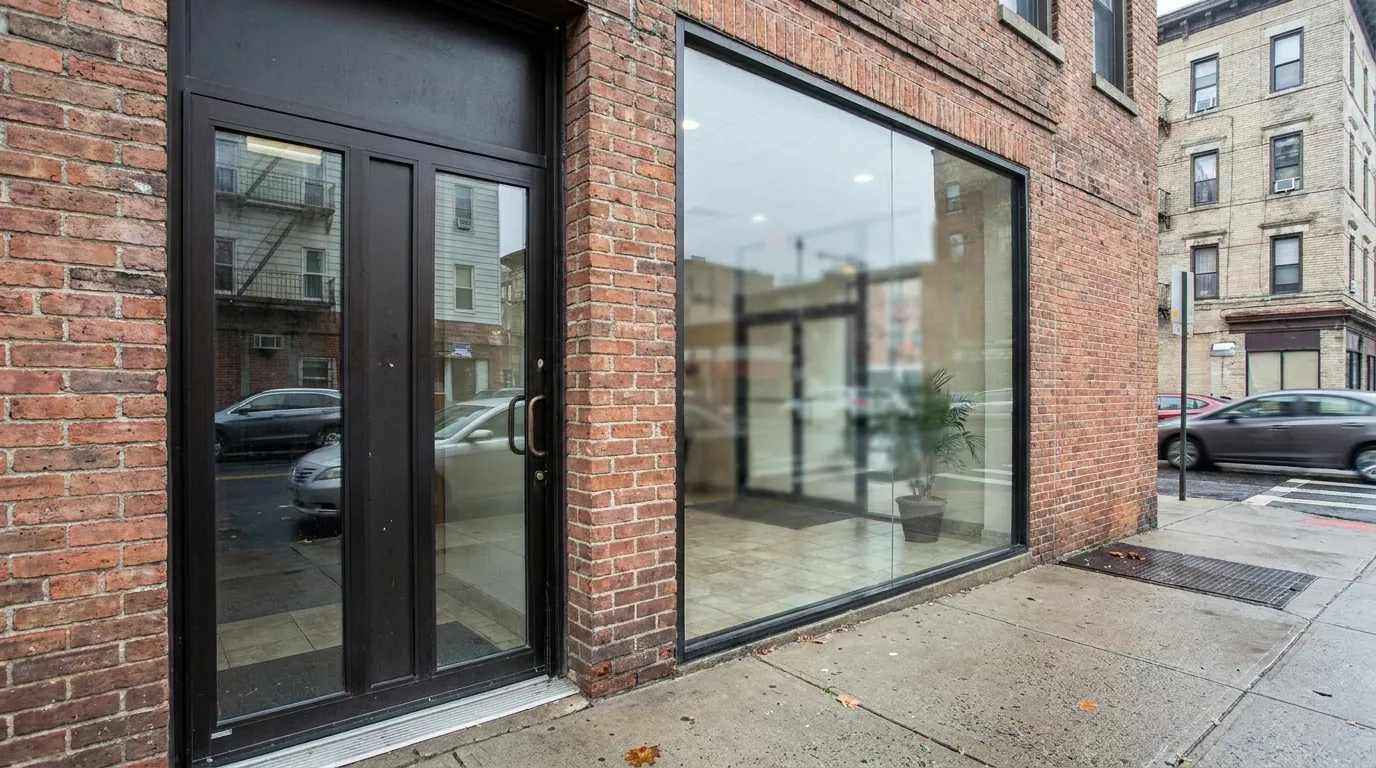
Photos show the kind of commercial door work discussed in this guide.
A storefront that will not stay closed, or a back door that will not latch, is usually a hardware problem. Closers and push bars do more daily work than the door itself.
Size the closer to the door and the wind
A street-facing aluminum door in Paulus Hook needs more closer power than an interior office door. Too weak and the door hangs open. Too strong and it slams or is hard to open.
Push bars are exit hardware, not decoration
Panic devices have to release from the inside and latch from the outside. A bar that is painted shut, missing a latch, or paired with the wrong strike is a security and egress problem.
Floor closers hide, then fail quietly
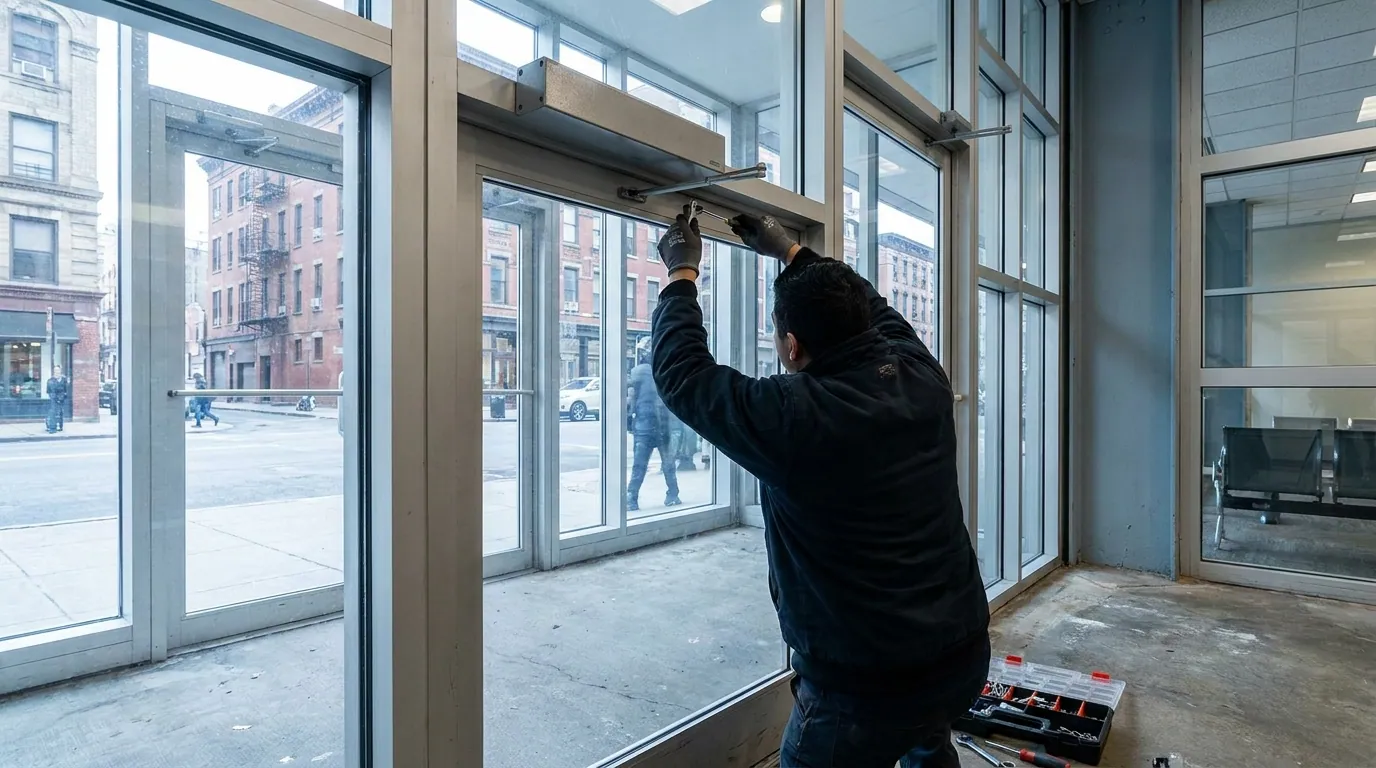
Many glass and aluminum entries use a closer in the floor. When it leaks or loses power, the door drifts. Repair or replacement should be quoted with the threshold and pivot.
Write hardware as its own line
A useful quote lists the closer, arm, push bar, strike, and any hold-open separately from the door. That is how two bids stay comparable.
Meadowlands Commercial Door Solutions services closers and panic hardware from 333 Washington St, Jersey City, NJ 07302. Describe the door and send a photo of the hardware.
Planning a commercial door project?
Share the facility, opening, door type, operator needs, and timing with Meadowlands Commercial Door Solutions for a project-specific follow-up across Jersey City, Hudson County & the Meadowlands.